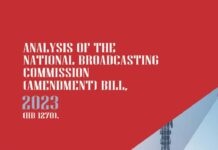

The National Broadcasting Commission (Amendment) Bill, 2023 (HB 2039) proposes significant changes to Nigeria’s broadcasting regulatory framework by expanding the powers of the National Broadcasting Commission (NBC) to regulate market competition, monopolistic practices, content acquisition and distribution.
Sponsored by Hon. Jubrin Abdulmumin, the Bill seeks to address concerns about market concentration and limited consumer choice in Nigeria’s broadcasting sector. It would reposition the NBC from primarily regulating broadcast content and licensing to also playing a stronger role in ensuring fair competition within the industry.
Key Provisions of HB 2039
One of the central proposals is the introduction of new competition regulations that would empower the NBC to develop and enforce codes of practice and standards for fair market conduct.
The Bill seeks to:
- Prohibit exclusive agreements that restrict competition or limit access to important broadcast content.
- Prevent broadcasters and service providers from abusing dominant market positions.
- Allow the NBC to investigate and sanction anti-competitive conduct.
- Establish rules covering content acquisition, pricing and market behaviour.
- Apply competition rules to both local and foreign entities operating in Nigeria’s broadcasting space.
- Potentially compel dominant providers to share or license certain high-demand content where specified conditions are met.
- Introduce fines of at least ₦10 million for certain anti-competitive practices.
The Bill also proposes a framework for assessing market dominance, market shares, barriers to entry and other economic factors when determining whether conduct could harm competition.
What Could the Bill Mean for Consumers?
The proposed reforms are designed to promote fair pricing, wider access to content, greater programming diversity and more opportunities for new entrants.
The Bill also proposes a pricing cap of ₦4,000 per subscriber per month for certain premium content, while requiring the NBC to safeguard consumer interests and prevent consumer deprivation.
If effectively implemented, the proposed reforms could create a more competitive broadcasting environment and reduce the ability of dominant players to restrict access to popular content.
Concerns and Potential Challenges
Despite its potential benefits, the analysis identifies several legal, regulatory and practical concerns.
A major concern is overlap between the NBC and the Federal Competition and Consumer Protection Commission (FCCPC). Giving the NBC extensive competition-regulation powers could create uncertainty over which agency has primary responsibility for competition matters in the broadcasting industry.
There are also concerns about:
- Regulatory overreach and excessive administrative powers.
- Possible constitutional challenges relating to fair hearing and property rights.
- The impact of compulsory content sharing on investment in sports, entertainment and original programming.
- The practicality of enforcing price caps and complex competition rules.
- Limited institutional and technical capacity within the NBC.
- Potential effects on foreign investment and innovation.
- Ambiguity around important concepts such as “dominant position” and anti-competitive conduct.
Recommendations
The analysis recommends clearer boundaries between the NBC and FCCPC, stronger safeguards around the Commission’s new powers, stakeholder consultation and independent mechanisms for reviewing regulatory decisions.
It also recommends building the NBC’s technical and institutional capacity, protecting intellectual property and investment incentives, and considering pilot programmes before implementing complex competition measures across the entire broadcasting sector.
Conclusion
HB 2039 represents a major proposed reform of Nigeria’s broadcasting industry. By giving the NBC stronger powers to tackle monopolistic behaviour, regulate market conduct and promote fair access to broadcast content, the Bill could strengthen competition and consumer protection.
However, its success would depend on clear legal definitions, effective coordination with other regulatory agencies, adequate institutional capacity and strong safeguards against regulatory overreach. The analysis concludes that, if carefully implemented and balanced with the interests of broadcasters, consumers and investors, the Bill could help promote a more competitive and innovative Nigerian broadcasting sector.
Download the Full Analysis
Want to understand the proposed reforms in greater detail, including the Bill’s legal implications, potential risks, recommendations and impact on broadcasters and consumers?